Data Solutions

Introduction
The rapid advancements in technology, particularly in the fields of artificial intelligence (AI) and machine learning, have led to significant shifts in economic paradigms. While these technologies promise unprecedented efficiency and capabilities, they also pose ethical and economic problems that could lead to increased inequality if not addressed.
"The digital era is exacerbating income disparities, with a few corporations amassing enormous wealth while leaving the majority behind." - Brookings Report

The Economic Field
The digital era has brought about significant economic changes, including the rise of gig economies, automation, and the digitalization of various sectors. However, these changes have also led to increasing inequality.
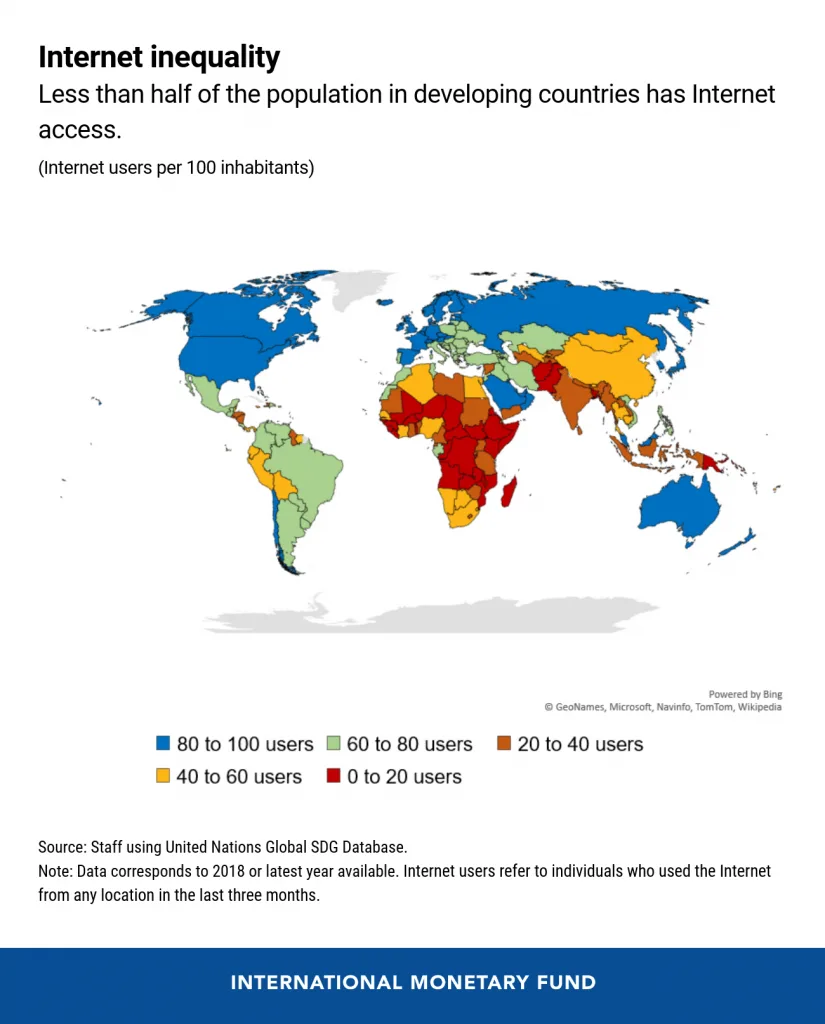
Disadvantaged groups and people living in rural areas often have more limited access to the Internet. This restricts their ability to benefit from educational and economic opportunities, thereby widening income inequality.
Countries like India and those in sub-Saharan Africa have lower rates of Internet access compared to advanced economies. This hampers their productivity and economic growth.
"Low internet access is driving inequality." - IMF Article
The Technological Field
AI and LLMs are becoming increasingly integrated into various industries, from healthcare to finance. For example, Curium LLMs are being explored for their potential in question generation and document analysis.
Dystopian Scenarios
- Corporate Monopoly: If left unchecked, a few corporations could monopolize AI technologies, leading to a future where they own all means of production. This could render humans who don't own these companies as supernumerary.
- Economic Inequality: The digital divide could widen, leaving behind those who cannot adapt to or afford these new technologies.
- Loss of Jobs: Automation and AI could lead to mass unemployment as machines take over tasks previously performed by humans. The promise of machines doing all the repetitive work is not fulfilled; instead, AI handles all the creative work, leaving the poorly-paid repetitive tasks to humans.

Utopian Scenarios
- Economic Democratization: Proper regulation could lead to the democratization of AI, allowing for more equitable distribution of resources.
- New Job Creation: While some jobs may become obsolete, new roles could emerge that require human creativity and emotional intelligence.
- Sustainable Development: AI could be used to solve pressing global issues like climate change and healthcare.
- AI Automates Repetitive Tasks: One of the most promising aspects of AI is its ability to automate mundane and repetitive tasks. This could free up human time and energy for more creative and fulfilling endeavors.
- Abundant Food Production: AI could revolutionize agriculture, making food production more efficient and sustainable, thereby ensuring food security.
- Climate Change Mitigation: Advanced algorithms could analyze environmental data to provide practical insights for combating climate change.
- Human Freedom for Creativity: With AI taking over repetitive tasks, humans could focus on creative pursuits like art, literature, and innovation, potentially ushering in a new renaissance and golden age.

The Role of Large Language Models
Large Language Models are AI models characterized by their vast size, often containing tens of millions to billions of peices of information. They can process vast amounts of text data, mostly scraped from the Internet.
Large Language Models, although not yet widely adopted, show promise in revolutionizing how we interact with information. They could be used for data analysis, predictive modeling, and even in education, serving as 24/7 consultants for students. They can act as editors, write resumes, and create outlines for videos.
Counterarguments
-
AI for Good: Advocates argue that AI can be used ethically and responsibly. They cite its applications in healthcare for diagnostics and treatment plans, as well as in environmental conservation where it helps in monitoring ecosystems and predicting natural disasters.
-
Regulation: Another perspective is that existing laws and regulations can be adapted to govern AI effectively. Proponents believe that with the right legal framework, the risks associated with AI can be mitigated.
Limitations of These Arguments
While these counterarguments present valid points, they often overlook critical issues related to economic inequality and the displacement of workers, particularly in developing nations.
-
Economic Inequality: The focus on AI's potential benefits in sectors like healthcare and environment often overshadows the economic disparities it can exacerbate. For example, developing nations may not have the resources to implement or regulate AI, widening the gap between them and developed countries.
-
Displaced Workers: The counterarguments rarely address what happens to workers who lose their jobs due to automation and AI. While new jobs may be created, there is no guarantee that displaced workers will have the skills or opportunities to transition into these new roles.
Conclusion
The future shaped by economics and technology is still uncertain. However, it is crucial to address the ethical and economic implications now to steer towards a more utopian rather than dystopian outcome.
"They are not a given and carefully designed policy would be able to foster the development of AI while keeping the negative effects in check." - European Parliament Report
Practical Insights
- Economic Reforms: We need to change our economic system to provide more equitable opportunities for all, reducing the influence of corporations on governments.
- Public Awareness: Educate the public about the potential risks and benefits of AI and LLMs.
- Policy Changes: Advocate for laws that regulate AI and prevent monopolies.
Join the Discussion
Feel free to share your thoughts and perspectives on this critical issue. Your input is valuable in shaping a future that benefits us all.